Book Appointment Now


High-Voltage Coolant Heater Integration: Check the Low-Voltage Supply Too
Review low-voltage supply, control power and vehicle operating modes when integrating a high-voltage coolant heater. Confirm interfaces before sample approval.
Simply verifying the high-voltage range and heating power is not sufficient to complete the electrical evaluation of a coolant heater. The selected configuration may also require a separate low-voltage power supply for its control electronics and interfaces. Before planning the vehicle wiring harness, be sure to review the published drawings to confirm the relevant requirements.
For electric buses and trucks, this involves both power supply boundaries and control logic. Which circuits must remain available when a heating request is issued? What changes occur in the system when the vehicle switches operating modes?
Distinguish Between Heating Power and Control Power
High-voltage heating inputs and low-voltage control power supplies serve different functions. Never infer the control power supply range, connector pin definitions, or current requirements based solely on the heater’s nominal heating power.
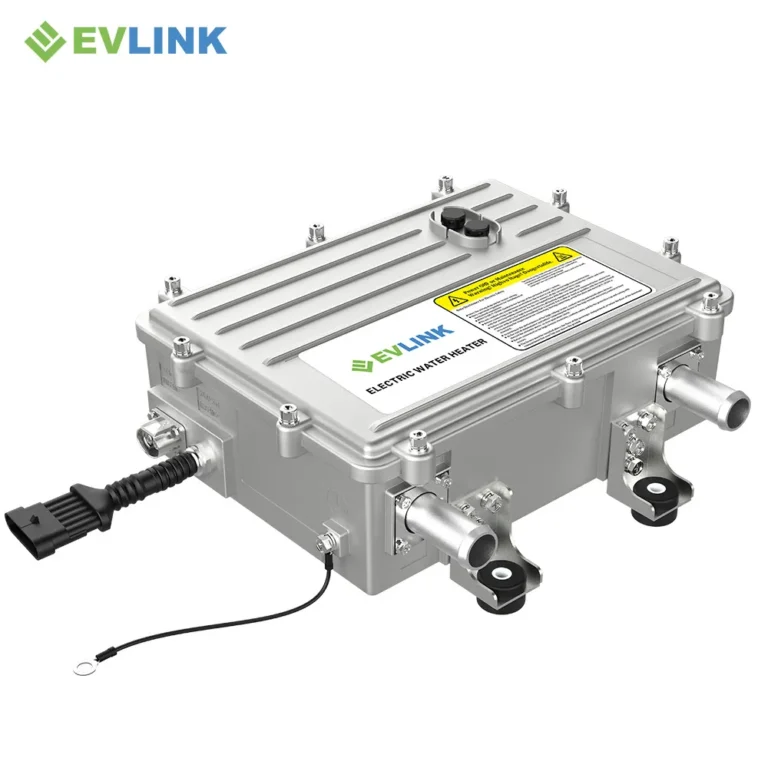
The EVLINK series of high-voltage coolant heaters includes multiple configurations. Be sure to refer to the interface information for the specific model selected; never apply the electrical requirements of a single model directly to the entire product series.
Clearly define the permissible range of the control power supply, current parameters, connector and wiring harness requirements, as well as the applicable operating conditions. If requirements related to the startup, standby, or shutdown phases are not specified in the documentation, list them as “open engineering items”; never directly apply generic values from other heaters.
Verify the power supply conditions at the heater interface
The rated voltage of the vehicle’s auxiliary power bus does not equate to the actual voltage at the heater connector. Factors such as harness resistance, connection points, and shared loads may all affect the final electrical conditions delivered to the heater.
A qualified vehicle engineer must evaluate the selected wiring scheme and power supply configuration against published component technical requirements. During the evaluation, the locations of measurement points, operating modes, and other simultaneously active loads must be confirmed. This document does not address fuse specifications, cable sizing, or parameter settings for protective devices; these should be determined based on an approved electrical design.
Verify Availability for Different Operating Modes
The vehicle’s power status may vary depending on whether it is in motion, plugged in for charging, in park with preheating (preconditioning) active, or shut down. Even if a heater supports operation while the vehicle is in motion, this does not necessarily mean it has been validated for park heating conditions.
| Review item | What to confirm for each mode |
| Supply availability | Whether the required high- and low-voltage circuits are available |
| Request ownership | Which controller issues and cancels the heating request |
| Communication | Required signals, validity conditions and acknowledgement |
| Coolant circulation | How circulation is established and monitored under the agreed design |
| Limits and faults | Which component reports a restriction and how the vehicle responds |
| Shutdown | The documented sequence and conditions for removing supplies |
Before finalizing the selected configuration, please treat the relevant matters as issues requiring confirmation. A general operating sequence alone does not prove that the EVLINK heater exhibits specific wake-up, delay, or restart behaviors.
Never automatically assume that every instance of “no response received” is a CAN bus failure.
If the heater does not respond to a request, retain the original log and verify the electrical and communication boundary conditions agreed upon by both parties. Relevant evidence may include: control power supply status, vehicle power status, request transmission timing, feedback signals, and system-reported fault messages.
The presence of high voltage does not necessarily mean the controller has received a valid control power supply; conversely, even if the control power supply is normal, it does not guarantee that all heater startup conditions have been met. Before drawing any conclusions, be sure to consult the published interface specifications to verify all necessary conditions.
The “HVCH CAN Integration Checklist” is intended to assist with signal planning; it does not replace the electrical technical documentation for the selected heater, nor does it authorize testing outside the heater’s specified operating range.
Please reach a consensus on the validation plan before conducting sample testing.
Testing should be performed by qualified personnel using appropriate instruments and in accordance with approved vehicle and high-voltage operating procedures. Before switching test modes or changing power supply conditions, the initial state, monitoring signals, and acceptance criteria must be clearly defined.
Do not use this general checklist to intentionally induce electrical faults, disconnect live equipment, or bypass protective devices. Any fault injection testing must follow specific authorized procedures. If the observed response does not conform to established specifications, retain a timing record and consult with the relevant supplier to resolve the issue.
Prepare for the electrical interface evaluation.
When communicating with EVLINK, please provide the following information: the proposed heater model, the vehicle’s high-voltage range, auxiliary power conditions, operating modes, and control architecture. Additionally, include the wiring harness layout, relevant shared load information, and required diagnostic data.
Please request a configuration evaluation covering “heating input” and “control power.” Before approving samples, be sure to confirm the relevant drawings, software interfaces, and testing responsibilities of all parties. This will help ensure that the selected high-voltage components can be fully integrated into the vehicle.