Book Appointment Now


Reading a BTMS Quotation: Five Lines That Decide Whether the Unit Fits Your Vehicle
Suppose the vehicle interface voltage in your project can reach 820 V. You then receive a quotation for a 12 kW unit. Its cooling capacity appears more than adequate, and the price is reasonably fair. However, upon checking the voltage range, you discover that the unit’s upper limit is only 750 V. At this point, the comparison is over—no matter how high the cooling capacity, it is of no use.
We have found that this type of ‘selection error’ is more common than simple capacity shortfalls. In quotations for battery thermal management systems (BTMS), there are five key specifications that determine whether a product is suitable, yet buyers often examine them in the wrong order. The cooling capacity specification, being at the top of the page and in bold typeface, is usually the first to attract attention; in reality, however, it should come third. We recommend the following order of review:
The first is the voltage range.
This is a ‘hard constraint’—no matter how impressive the cooling capacity figure may be, it cannot alter this fundamental limitation. Take our products as an example: the voltage range for the LDC300HA-3KW and LDC280HA-12KW is 400–750 V DC, whilst that for the LDC502HA-5KW and LDC560HA-5KW is 400–860 V DC. If buyers focus solely on power ratings such as 3 kW, 5 kW or 12 kW, they are highly likely to overlook the aforementioned differences in voltage. Judging by the voltage range alone, if a vehicle’s interface voltage reaches 820 V, it is clearly inappropriate to select equipment with an upper limit of 750 V. For models with a voltage range of 400–860 V, further electrical assessment is required; however, the voltage range alone is insufficient to determine whether they are fully compatible with the vehicle as a whole. If the system architecture includes a separate converter or other power supply unit, it is essential to assess the actual voltage applied to the BTMS interface and to record the minimum and maximum voltages at the equipment connection point, along with the corresponding operating conditions. Under no circumstances should the nominal voltage of the upstream battery be compared with incorrect interface parameters.
The second consideration is heating capacity.
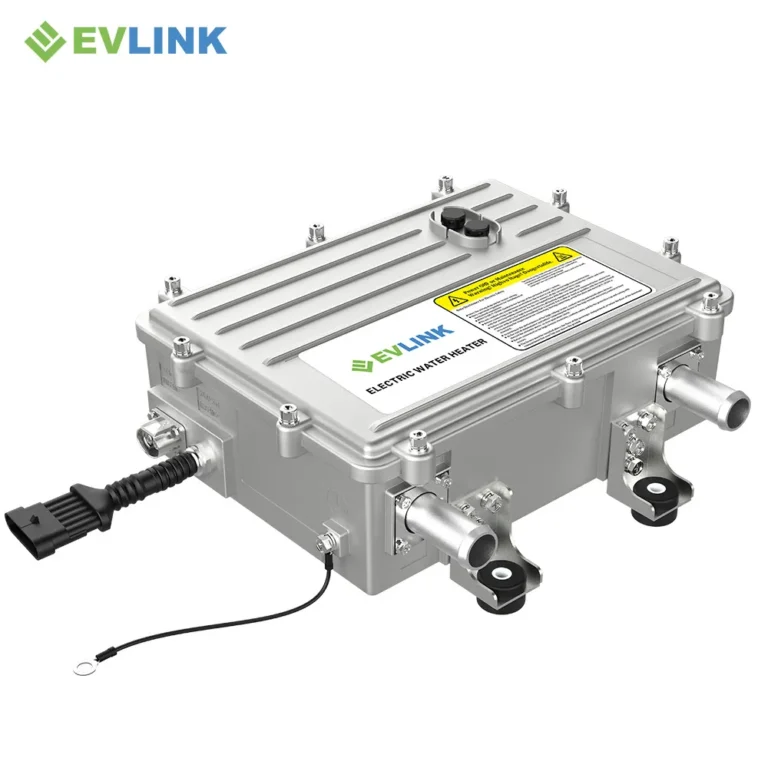
Even if two units have the same cooling capacity, their performance under winter operating conditions may differ significantly. Both the LDC502HA-5KW and the LDC560HA-5KW have a rated cooling capacity of 5 kW, support a DC input range of 400 to 860 V, are equipped with a 24 V DC control power supply, weigh 32 kg, and have external dimensions of 775 × 594 × 286 mm. However, their heating configurations differ: the LDC502HA lists the heating function as ‘optional’ without specifying a particular capacity, whilst the LDC560HA is explicitly equipped with a 6 kW PTC heating function as standard. Although the product page for this series of 5 kW Battery Thermal Management Systems (BTMS) mentions the LDC560HA’s 6 kW heating configuration, this does not imply that all 5 kW models in the series share the same configuration. For projects requiring only cooling functionality, it is entirely reasonable to designate the heating function as ‘optional’; however, for vehicles requiring a pre-heating function, the following issues must be clarified: specifically, which type of heater is used? How is the control scheme designed? Which installation components are included? When making comparisons, these specific configuration details should be listed, rather than relying solely on the ‘cooling rating’ to draw inferences.
The third parameter is cooling capacity (which must be interpreted in conjunction with the specified operating conditions).
A cooling rating of 5 kW merely represents the heat removal capacity under specific operating conditions; it does not, in itself, provide information regarding electrical input. Heating capacity and cooling capacity are distinct functional parameters, and combining them into a single ‘system rating’ can be misleading. For example, continuously outputting 6 kW of heat for half an hour implies the transfer of 3 kWh of thermal energy; however, this does not directly determine the rate of temperature rise for a specific battery pack. The thermal mass of the battery pack, its initial temperature, heat loss, coolant distribution and the heater’s actual available output power are the key factors determining the temperature response. This is not an EVLINK pre-heating test.
The fourth parameter concerns physical dimensions and control power supply.
Even if the electrical parameters are compatible, the equipment must also fit physically into the available space and be capable of communicating with the vehicle’s systems. Both of the aforementioned 5 kW models weigh 32 kg, measure 775 × 594 × 286 mm, and utilise a 24 V DC control power supply. Before discussing capacity, please ensure that these parameters meet your installation space requirements and the specifications of the available control power supply.
If a unit requires a different control power supply or a different installation space, this will necessitate a redesign.
The fifth item is ‘To be determined’.
If a particular parameter has not yet been finalised, please explicitly list it as ‘To be determined’; under no circumstances should you assume it has been included without confirmation. Please specify the model and configuration version alongside parameters such as cooling capacity, heating capacity and voltage limits. In addition, please provide details regarding low-voltage power supply, control systems, structural dimension constraints and applicable operating conditions. A quotation that clearly identifies ‘pending items’ is far more useful as a reference than one that appears complete (but is in fact filled in with unfounded assumptions).
Of course, this information cannot replace selection calculations. When the required cooling capacity exceeds the output capacity of a smaller model under the corresponding operating conditions, consideration should be given to selecting a larger unit; however, please note that a larger battery capacity does not necessarily require a larger unit. First, the heat load distribution, cooling medium restrictions, environmental conditions and operating cycles must be clarified. For charging and driving conditions, a distinction must be made between peak load, duration and repetition frequency; for heating conditions, the initial state, target state and available time must be specified. If the above data is not yet clear, we recommend first clarifying your requirements. The ‘Battery Thermal Load Worksheet’ and ‘Battery Thermal Management System (BTMS) Rated Operating Conditions Guide’ we provide cover both aspects necessary for decision-making. This article focuses on configuration differences across different model tiers.
When consulting us regarding BTMS configuration solutions, please provide the following information: vehicle model, actual driving range, cooling and heating requirements, environmental conditions, and any installation drawings available for reference. At the same time, please clearly indicate which parameters remain undetermined. Providing these details is far more helpful in advancing the project than simply requesting a ‘unit with a maximum power of 5 kW’.