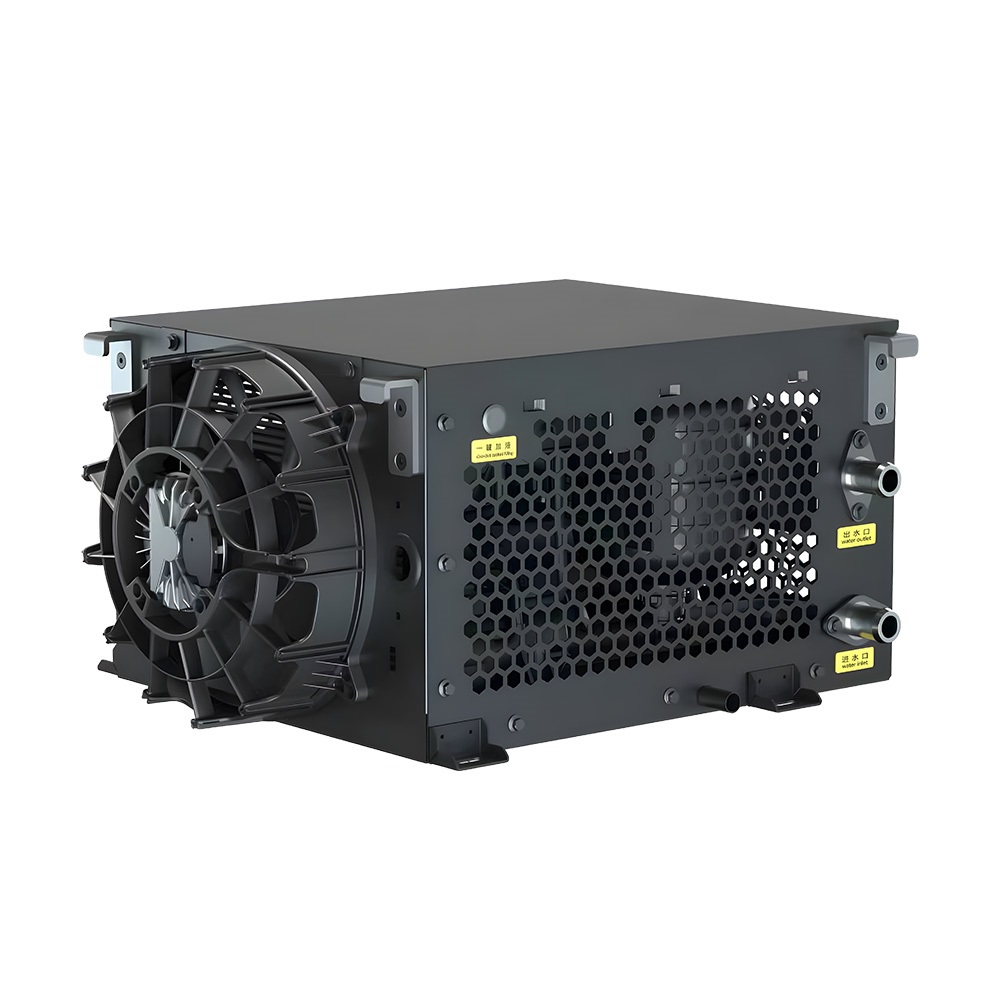
Battery Thermal
Management System

3kW, 5kW & 12kW BTMS with liquid cooling, CAN control and vehicle integration

3/5/12kw

Liquid cooling

OEM/ODM

CAN Control

EV Battery Thermal Management System Solutions

EVLINK Battery Thermal Management Systems are designed to regulate battery coolant temperature across different electric vehicle operating conditions.

By integrating refrigeration cooling, coolant circulation, intelligent control and optional or integrated heating functions depending on the model, our BTMS solutions support stable battery thermal management and vehicle-level system integration.

Multiple cooling capacities are available to match different battery thermal loads, voltage platforms and vehicle applications.

Active Liquid Cooling

Controls battery coolant temperature through an active refrigeration circuit

Intelligent Control

ECU-based control coordinates cooling, circulation and system operation

CAN Communication

Supports communication and coordination with the vehicle control system.

Vehicle Integration

Designed for integration with battery coolant loops and EV electrical architectures

BTMS Product Range

Battery Thermal Management System Series

3kW Battery Thermal Management System

3kW Rated Cooling

DC400–750V
CAN 2.0
IP67
Compact liquid cooling solution designed for EV battery systems with lower thermal loads and flexible vehicle integration requirements.
Heating: Optional external configuration


5kW Battery Thermal Management System

5kW Rated Cooling

6kW PTC Heating
DC 400~860V
CAN 2.0
IP67
Integrated battery cooling and PTC heating solution designed for EV platforms requiring active thermal management across hot and cold operating conditions

12kW Battery Thermal Management System

12kW Rated Cooling

8kW PTC Heating
DC400–860V
CAN 2.0
IP67
High-capacity battery thermal management solution for EV platforms with higher thermal loads and integrated cooling and heating requirements

How It Works

How Does a Battery Thermal Management System Work?


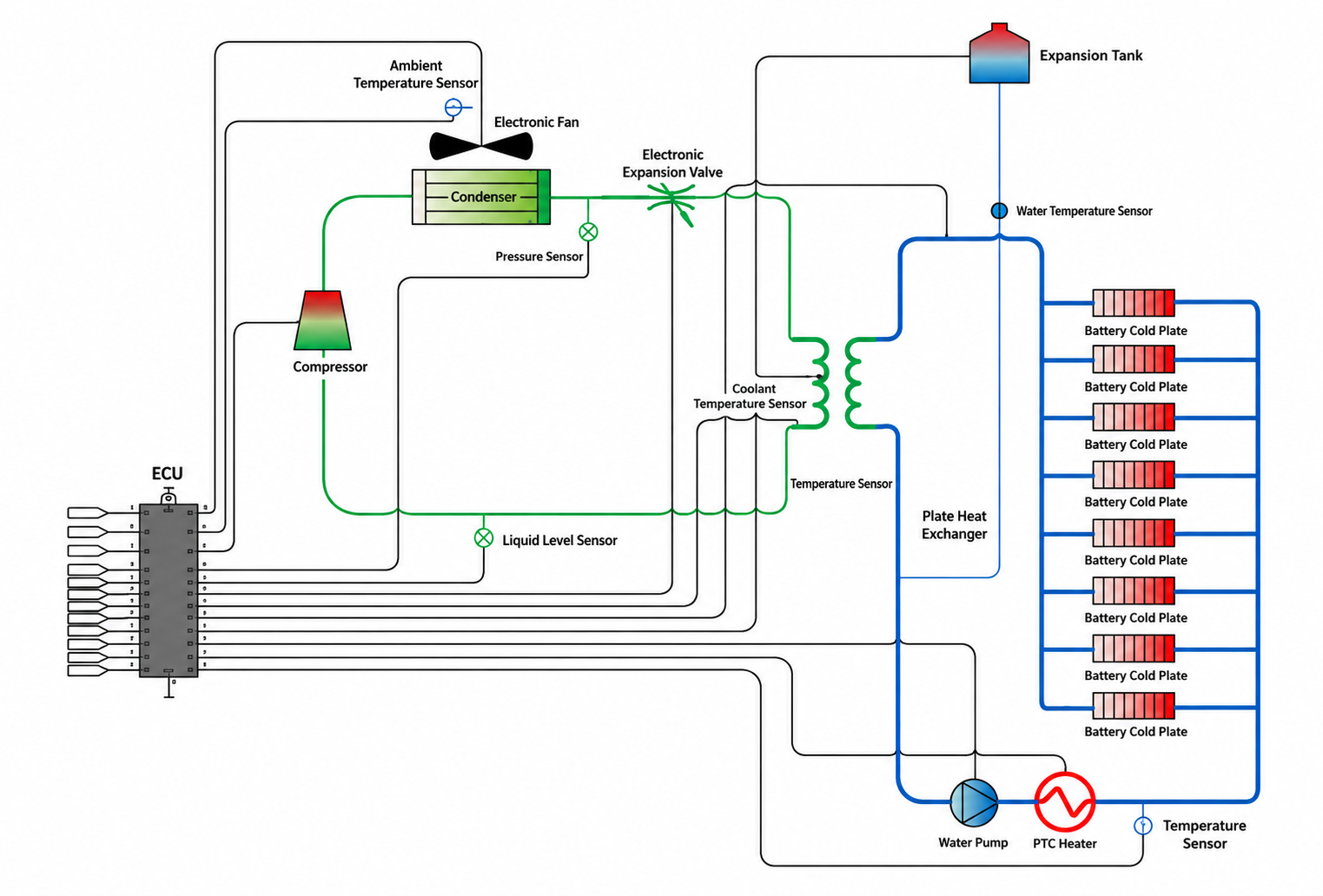
01 Battery Heat Transfer

Heat generated by battery cells is transferred to the coolant through the battery cold plate.

02 Coolant Circulation

The pump circulates heated coolant through the battery thermal management loop.

03 Heat Exchange

The coolant transfers heat to the refrigeration circuit through the heat exchanger.

04 Active Cooling

The refrigerant absorbs and transfers heat away from the battery coolant.

05 Intelligent Control

The ECU coordinates cooling, circulation and heating functions according to system requirements.

How to Select a Battery Thermal Management System

Cooling Load

Evaluate continuous and peak battery heat generation

Heating Requirement

Determine whether low-temperature battery heating is required

Voltage Platform

Match the BTMS with the vehicle electrical architecture

Coolant Flow

Confirm coolant flow and pressure requirements

Installation Space

Evaluate available mounting space and interface locations

CAN Communication

Confirm vehicle communication and control requirements

Applications

 Electric Commercial Vehicles

Thermal management for battery systems used in electric commercial vehicle platforms.

Electric Buses

Designed for integration with liquid-cooled battery systems in electric bus applications.

Electric Trucks

Supports battery cooling requirements for electric truck thermal management systems.

Special-Purpose EVs

Suitable for EV platforms requiring compact liquid cooling and intelligent thermal control.

3kW vs 5kW vs 12kW

Which BTMS Cooling Capacity Do You Need?

3kW BTMS

For battery systems with relatively lower calculated thermal loads where compact liquid cooling is required.

5kW BTMS

For EV platforms requiring medium cooling capacity together with integrated PTC heating.

12kW BTMS

For larger battery systems or vehicle platforms with higher calculated thermal management requirements.


Final selection should always be based on calculated battery heat load, ambient conditions and vehicle operating requirements.

Engineering & Customization

Custom Battery Thermal Management System Engineering

Different vehicle platforms have different battery capacities, thermal loads, coolant circuits, voltage systems and installation conditions. EVLINK can support BTMS selection and engineering integration based on actual project requirements

Thermal Load Evaluation

Support product selection based on battery thermal requirements.

Coolant System Integration

Evaluate coolant flow, interfaces and cooling circuit architecture.

CAN Communication

Support vehicle-level communication and control integration.

Mechanical Integration

Evaluate mounting position, dimensions and service accessibility.

FAQ

Battery Thermal Management System FAQs

What is a Battery Thermal Management System?

A Battery Thermal Management System (BTMS) controls battery temperature by managing heat transfer between the battery pack and the coolant system. Active systems can use liquid cooling, refrigeration and heating functions to maintain the required battery operating temperature.

How does an EV Battery Thermal Management System work?

Heat from the battery is transferred to the coolant through the battery cold plate. The coolant circulates through the BTMS, where heat is removed through a refrigeration circuit before the cooled fluid returns to the battery.

What BTMS cooling capacities are available?

EVLINK currently offers multiple BTMS cooling capacities, including 3kW, 5kW and 12kW, for different battery thermal load requirements.

Does the BTMS provide both cooling and heating?

It depends on the model. The 5kW and 12kW systems include PTC heating, while the 3kW model supports an optional external heating configuration.

Does the BTMS support CAN communication?

Yes. CAN communication is supported for vehicle-level system control, monitoring and thermal management coordination.

How do I select the correct BTMS capacity?

Selection should consider battery heat load, heating requirements, voltage platform, coolant flow, ambient temperature, installation space and communication requirements.

Can the BTMS be customized?

Project-specific integration can be evaluated according to vehicle voltage, coolant circuit, interfaces, communication requirements and installation conditions.

What information should I provide for BTMS selection?

Please provide your battery voltage, thermal load, cooling and heating requirements, coolant flow, installation space, ambient operating conditions and CAN communication requirements.


START YOUR PROJECT

Looking for the Right Battery Thermal Management System?

Share your battery voltage, thermal load, cooling and heating requirements, coolant flow, installation space and CAN communication requirements with our engineering team.

Get a BTMS Recommendation

STILL HAVE A QUESTION?

Discuss Your EV Thermal Management Requirements

Share the platform, voltage, thermal target, installation space, coolant or refrigerant, connectors, CAN requirements, validation stage and timing.

Submit Your Sourcing Request

To make it easier for you to receive a quote, simply leave your information, and we will contact you as soon as possible.

Contact Form Demo