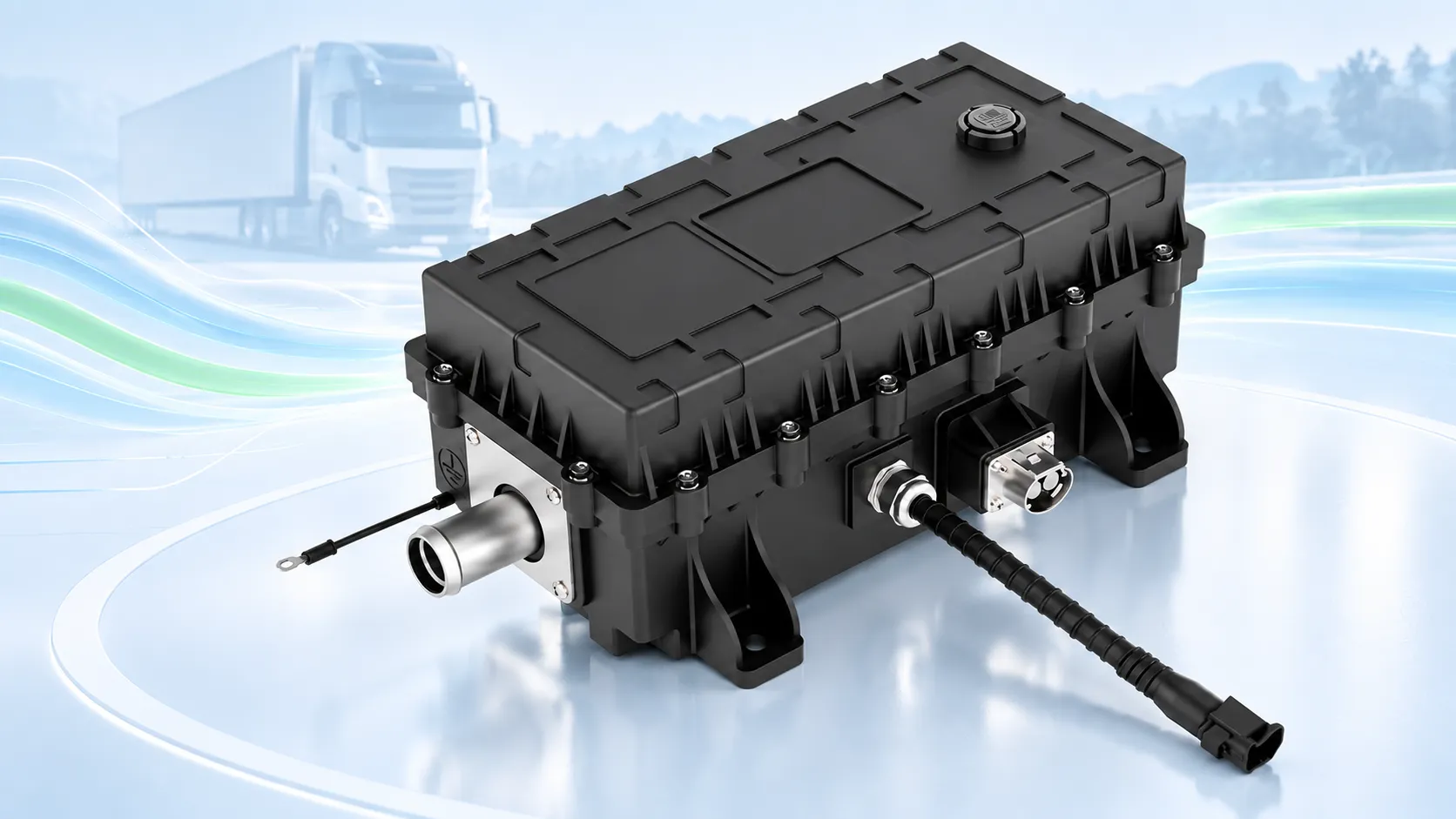
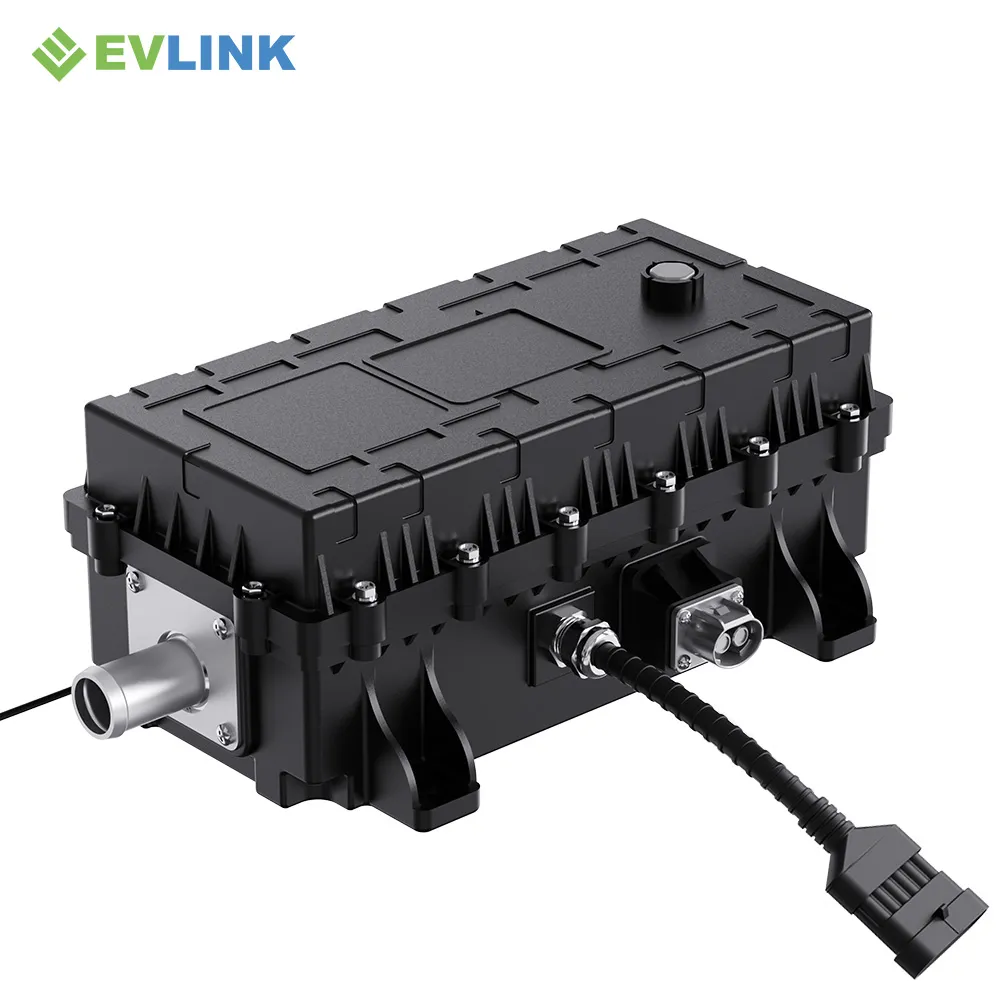
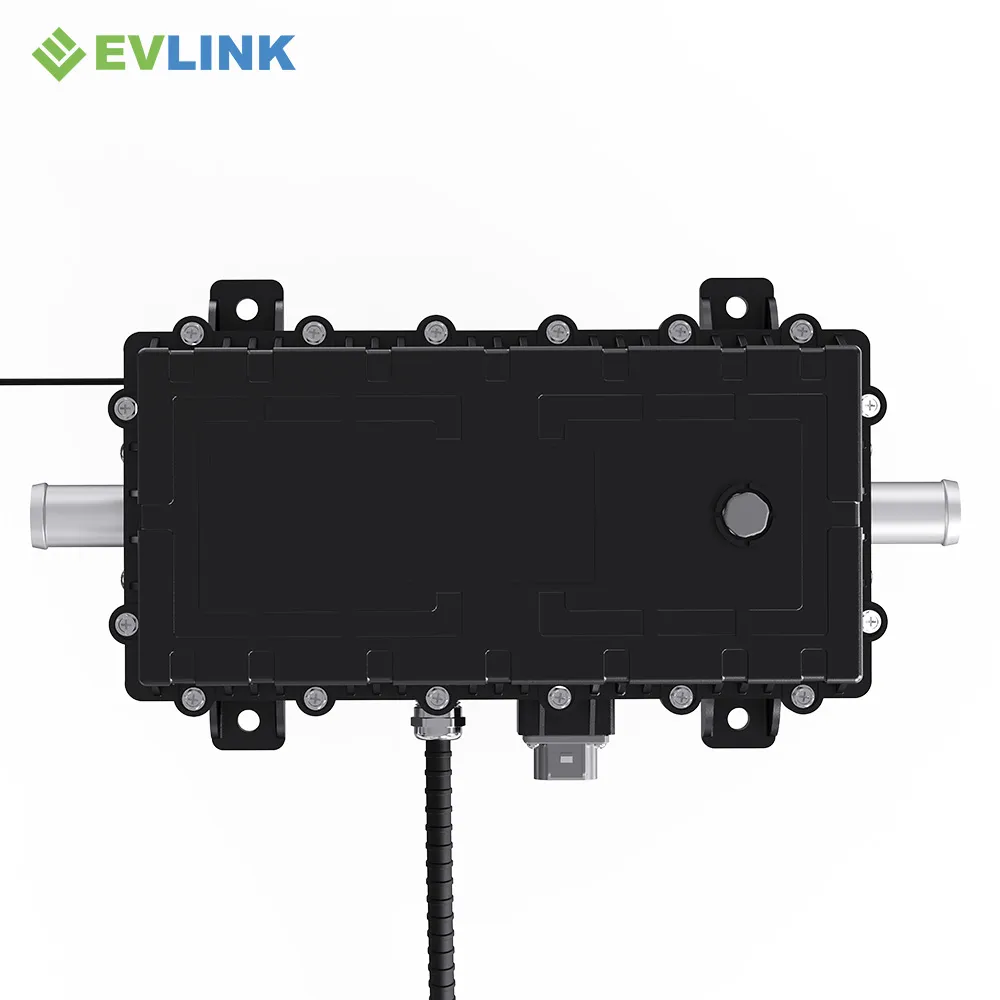
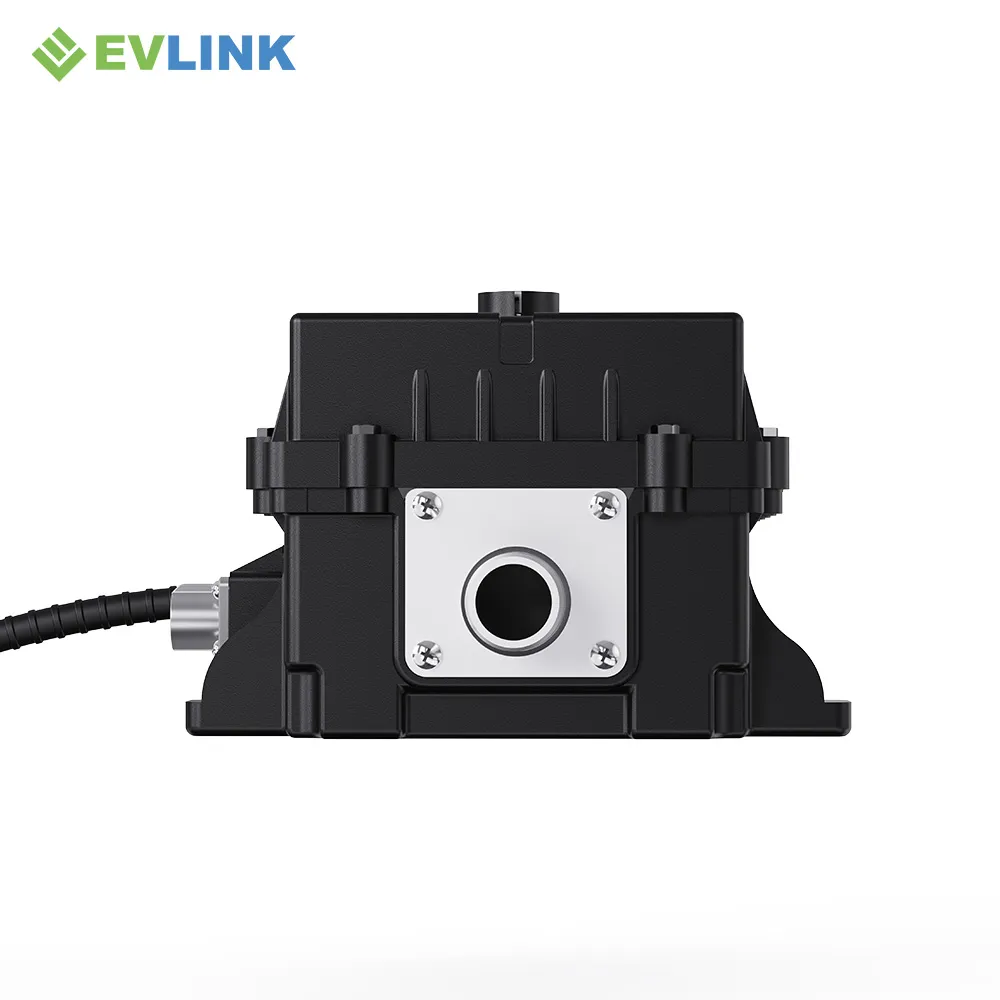
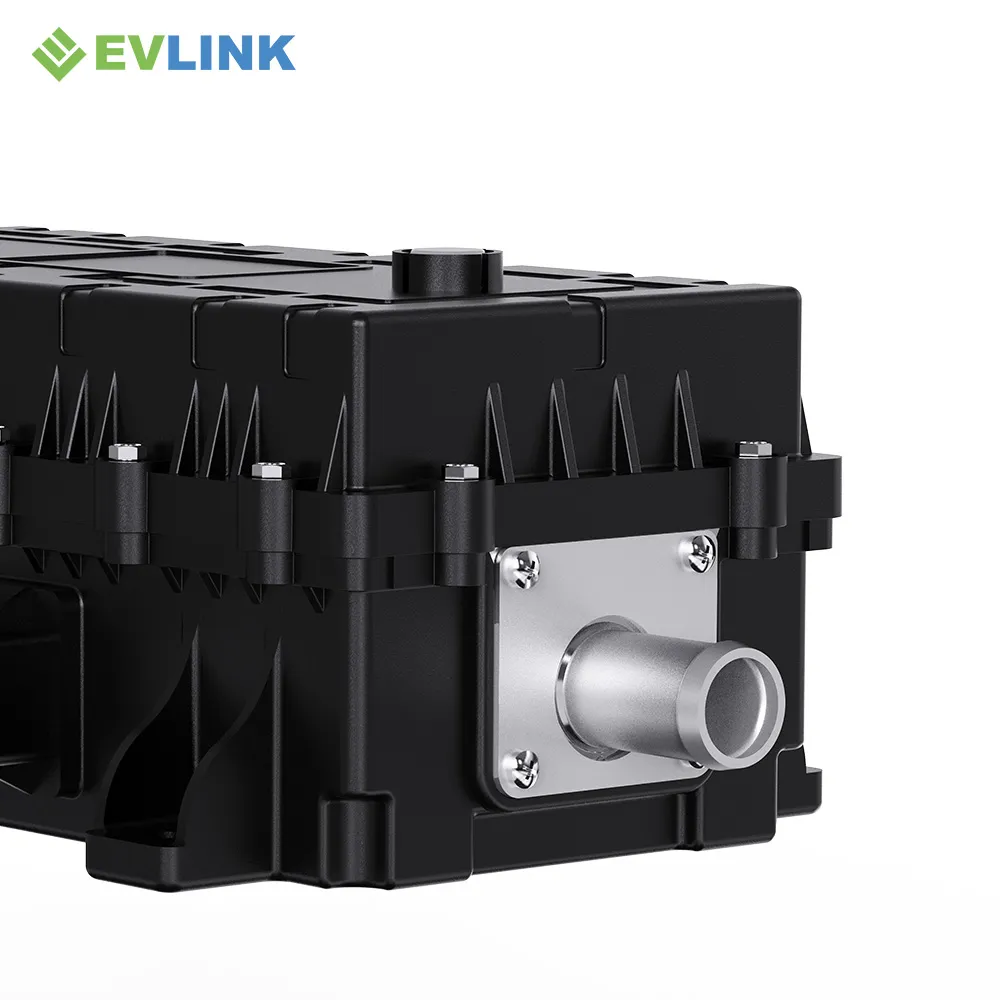
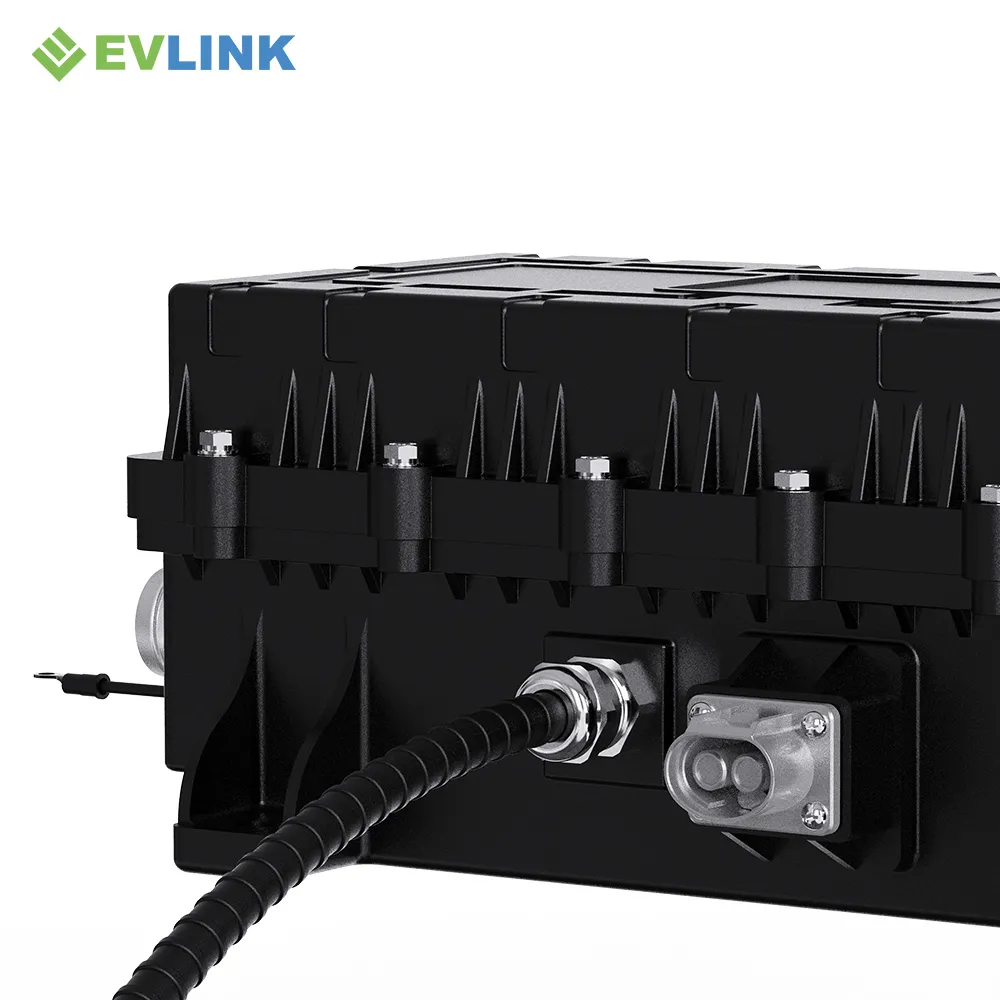
Housing, ports, connectors, mounting and harness direction should be checked against the released drawing.
TECHNICAL SPECIFICATIONS
B1 Series Technical Data
Values are transcribed from the supplied B Series artwork. Final configuration data is confirmed during project selection.
Rated Power
20–24 kW
Rated Voltage
Customizable — confirm the released project configuration
Operating Voltage Range
400–800 V
Operating Temperature
−40 °C to +85 °C
Insulation Resistance
≥100 MΩ at DC1000 V, high-voltage section
Protection Rating
IP67
Communication
CAN communication and enable-signal communication
Control
PID control, fault self-diagnosis and automatic power limiting
Safety Protection
Overvoltage, undervoltage, overcurrent, short-circuit and overheat protection
Weight
8.5 kg
Warranty
2 years
Applications
Battery heating, cabin heating and project-specific coolant circuits
BATTERY THERMAL MANAGEMENT
High-Voltage Coolant Heating for Battery Preconditioning
Define the heat-up target and coolant-loop conditions before selecting power and configuration.
01
Battery Coolant Heating
Transfer controlled heat into the battery coolant circuit.
02
Low-Temperature Support
Support cold-start and low-temperature operating strategies.
03
PID Temperature Control
Coordinate the heater target with vehicle-level control logic.
04
System Integration
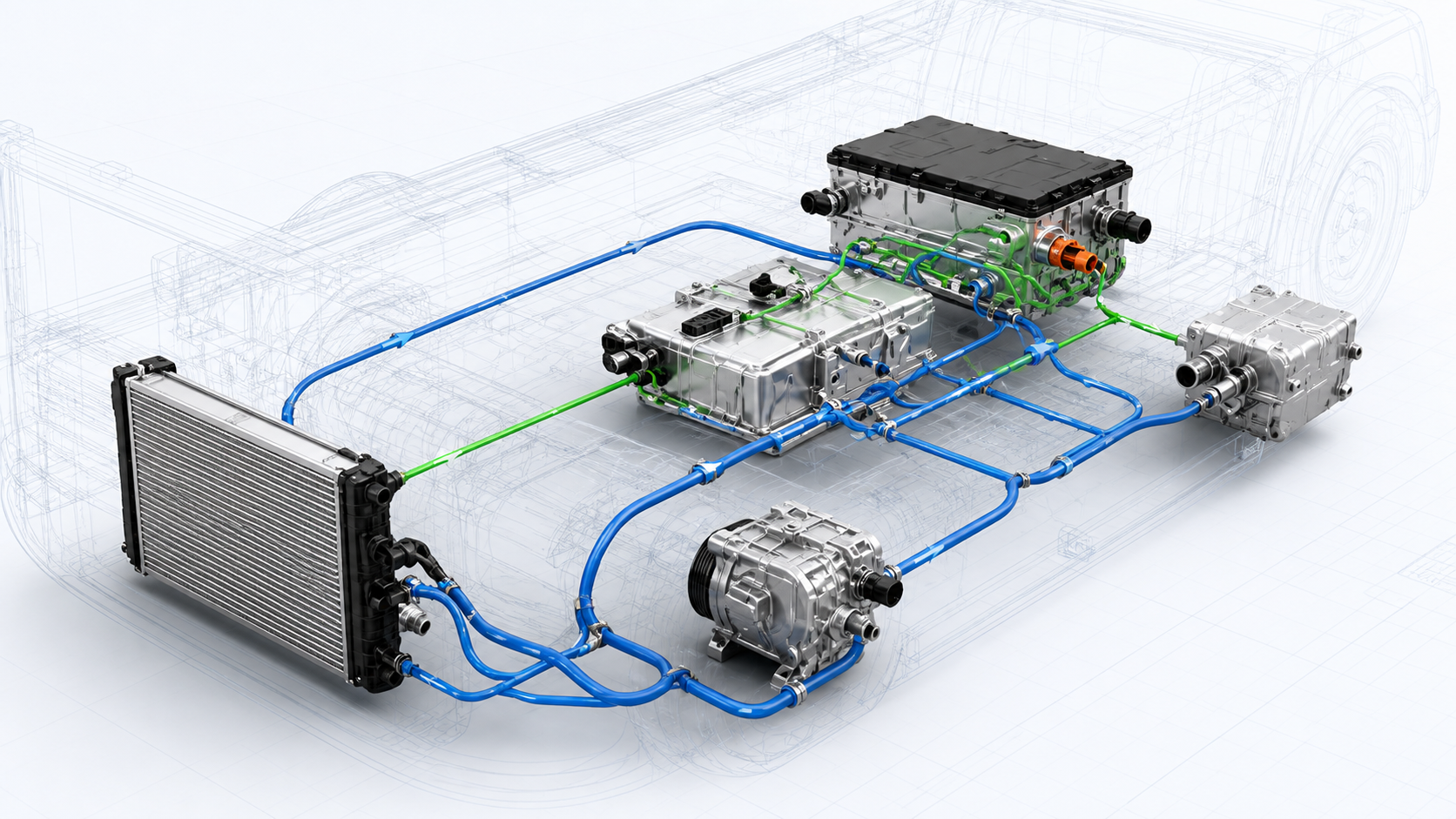
Review pump, valves, flow and BMS or VCU ownership.
CABIN HEATING
Electric Coolant Heating for Commercial EV Cabins
Heating suitability depends on the required cabin load, circuit architecture and operating priority.
01
Electric Cabin Heating
Provide liquid-loop heat without engine waste heat.
02
Coolant Circuit Integration
Match flow, temperature, pressure and hose routing.
03
High-Voltage Operation
Align the released heater with the vehicle voltage window.
CAN & System Monitoring
CAN communication
Enable-signal control
Fault self-diagnosis
Automatic power limiting
Project-specific command and feedback review
APPLICATIONS
Commercial EV Heating Applications
Use the application duty to define the heater—not the other way around.
01
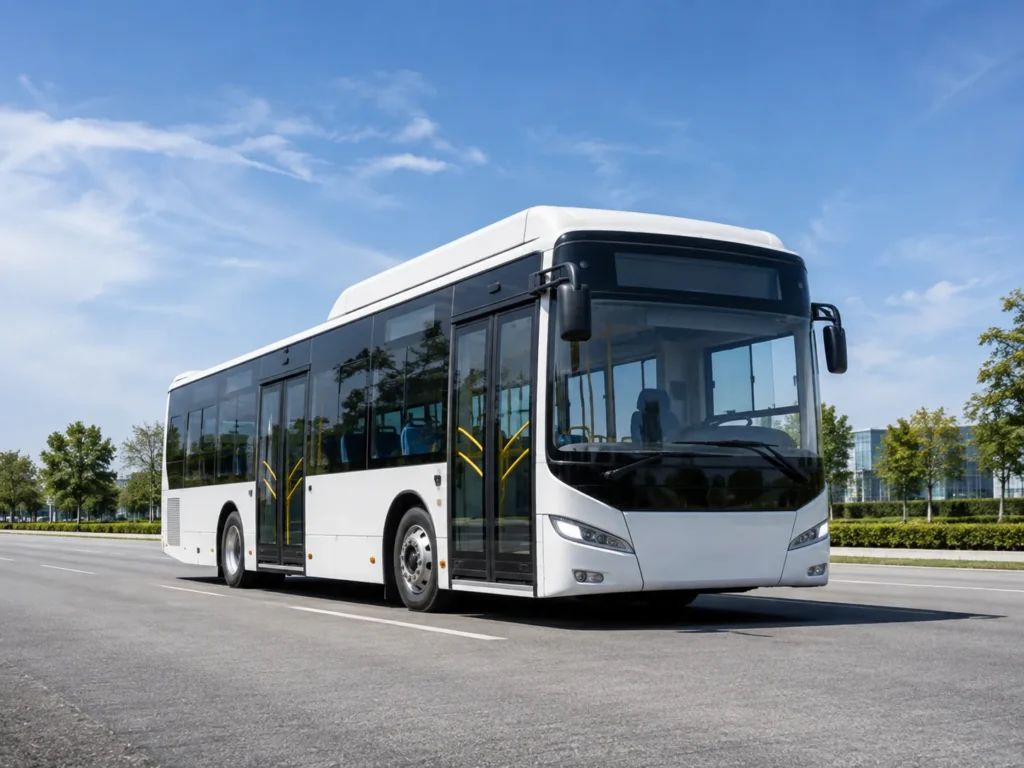
Electric Buses
Battery preheating and cabin-loop heating around route duty.
02
Electric Trucks
Cold-start and battery conditioning for commercial operation.
03
Construction Machinery
Project-specific heating for off-highway environments.
04
Special-Purpose EVs
Vehicle-specific coolant loops and packaging constraints.
OEM ENGINEERING SUPPORT
Configure the B Series Around the Vehicle
Heating power, voltage, connectors, coolant interfaces, CAN communication and installation configuration can be evaluated against actual project requirements.
01
Electrical
HV/LV window, connector and HVIL.
02
Hydraulic
Coolant, flow, pressure and ports.
03
Mechanical
Envelope, bracket and orientation.
04
Control
CAN, diagnostics and ownership.
PROJECT INPUT CHECKLIST
Send the Data Engineers Need
Vehicle and application
Nominal / minimum / maximum HV
Heating target and heat-up time
Coolant, flow and temperature limits
Installation space and preferred variant
CAN and diagnostic requirements
Prototype timing and forecast volume
Short-Circuit Protection
Overheat Protection
Overcurrent Protection
Overvoltage Protection
Undervoltage Protection
B-SERIES MODEL COMPARISON
Compare B1–B5 High Voltage Coolant Heater Configurations
Select by electrical operating range, coolant-pipe layout, low-voltage interface and high-voltage connector family—not by product appearance alone.
01
Confirm Electrical Range
B1–B5 share the supplied 20–24 kW, 400–800 V series range. Select the configuration by connector, coolant-pipe layout, mounting and service access; shared ratings do not make variants interchangeable.
02
Match Coolant Routing
Use the released drawing to confirm pipe direction and hose approach. B2 uses an S-bend layout, while B3 uses a straight-pipe layout.
03
Freeze Connector Family
Confirm the exact HV/LV connector, mating component, pin assignment and harness release before selecting B1, B4 or B5.
B1 SERIES · BA01 / AMPHENOL
B1 High Voltage Coolant Heater
20–24 kW
Rated power
400–800 V
Operating range
Configuration difference
6-pin low-voltage lead · punched LV outlet · PL Ø9
Selection trigger
Choose when the released BA01/Amphenol and 6-pin low-voltage interface match the vehicle harness.
Send the voltage window, heating duty, coolant-port direction, released connector family, installation drawing and CAN requirements for a configuration review.
Before quotation or design release, confirm connector part numbers, mating components, coolant-port geometry, mounting drawing, CAN revision and project-specific electrical limits. Published ranges describe the supplied product material and do not replace the released configuration drawing.
FREQUENTLY ASKED QUESTIONS
B Series Selection FAQ
Direct answers for engineering, purchasing and program teams.
The supplied B Series product material lists 20–24 kW rated power. The exact output and operating conditions should be confirmed for the selected B1–B5 configuration.
The supplied specification lists 400–800 V operation and describes rated voltage as customizable. Send the nominal, minimum and maximum vehicle voltage so the released configuration can be reviewed.
Choose by connector family, low-voltage interface, coolant-pipe direction and installation package. B2 uses an S-bend pipe arrangement, B3 uses a straight pipe arrangement, while B1, B4 and B5 provide different interface configurations.
The supplied material identifies battery heating and cabin heating applications. Suitability for one or both loops depends on thermal load, coolant architecture, flow, valves, control priority and the selected configuration.
Provide vehicle type, voltage window, heating target, coolant and flow, inlet and outlet temperatures, installation space, preferred connectors, CAN requirements, validation standards, prototype timing and forecast volume.
GET A CONFIGURATION RECOMMENDATION
Match B1–B5 to Your Vehicle Requirements
Send your voltage window, heating target, coolant conditions, package, connector preference and CAN requirements.
What you receive
A recommended B-Series configuration, the information still requiring confirmation and a technical review checklist.