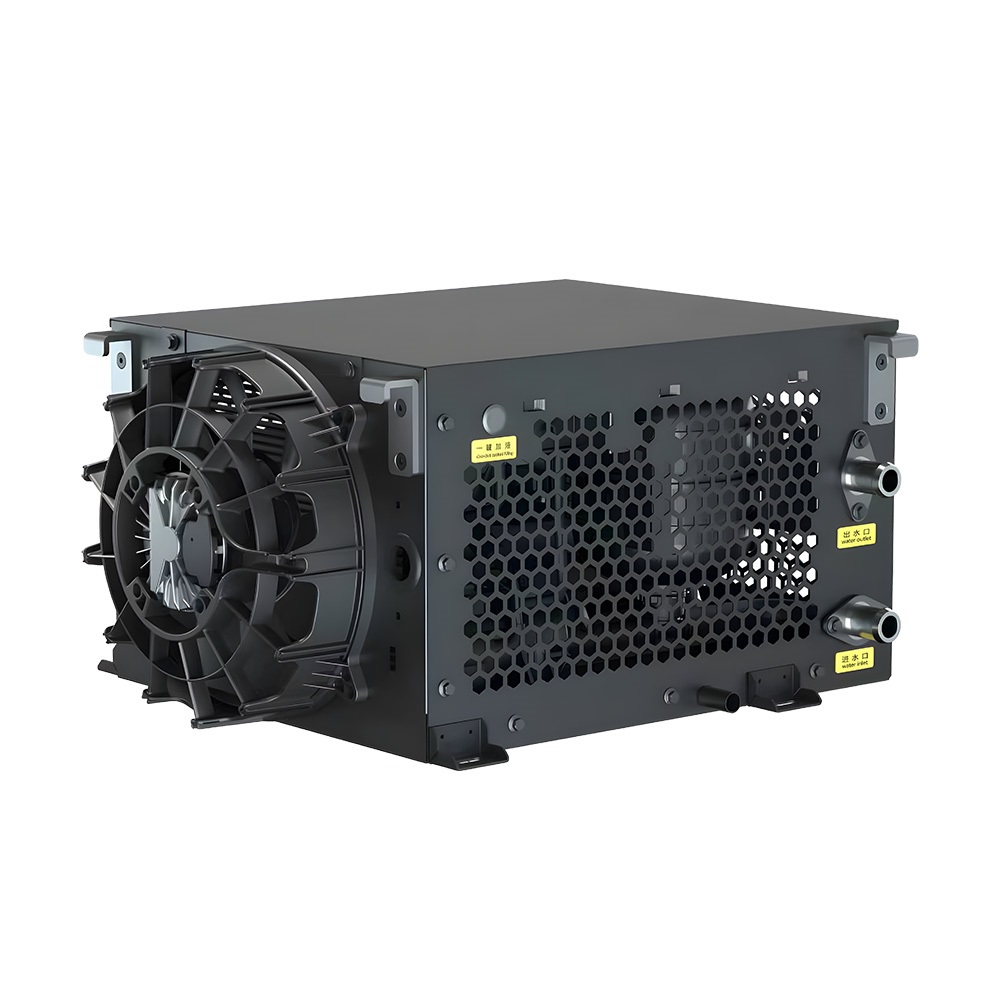
What is a Battery Thermal Management System?
A Battery Thermal Management System (BTMS) controls battery temperature by managing heat transfer between the battery pack and the coolant system. Active systems can use liquid cooling, refrigeration and heating functions to maintain the required battery operating temperature.
How does an EV Battery Thermal Management System work?
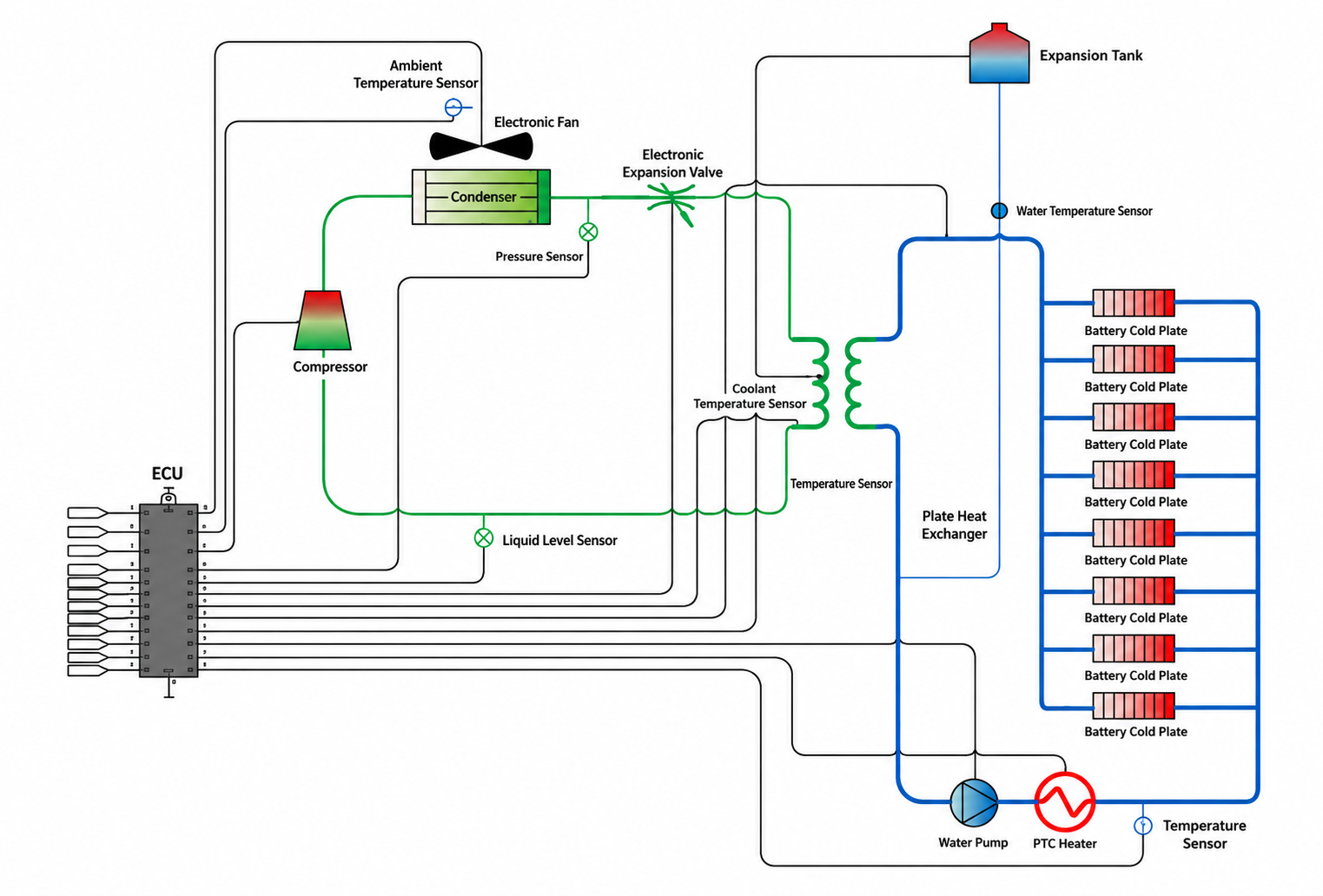
Heat from the battery is transferred to the coolant through the battery cold plate. The coolant circulates through the BTMS, where heat is removed through a refrigeration circuit before the cooled fluid returns to the battery.
What BTMS cooling capacities are available?
EVLINK currently offers multiple BTMS cooling capacities, including 3kW, 5kW and 12kW, for different battery thermal load requirements.
Does the BTMS provide both cooling and heating?
It depends on the model. The 5kW and 12kW systems include PTC heating, while the 3kW model supports an optional external heating configuration.
Does the BTMS support CAN communication?
Yes. CAN communication is supported for vehicle-level system control, monitoring and thermal management coordination.
How do I select the correct BTMS capacity?
Selection should consider battery heat load, heating requirements, voltage platform, coolant flow, ambient temperature, installation space and communication requirements.
Can the BTMS be customized?
Project-specific integration can be evaluated according to vehicle voltage, coolant circuit, interfaces, communication requirements and installation conditions.
What information should I provide for BTMS selection?
Please provide your battery voltage, thermal load, cooling and heating requirements, coolant flow, installation space, ambient operating conditions and CAN communication requirements.