Book Appointment Now



High Voltage PTC Heater Selection Guide for EVs
Picking a high-voltage PTC heater starts with the heating task, not the kilowatt rating. Define what the battery system needs — preheating, cabin heating, or both — under real operating conditions, then match the heater’s voltage platform, power band, control interface, and coolant loop to that task. Get those four matches in writing before approving samples, and most integration problems never appear.
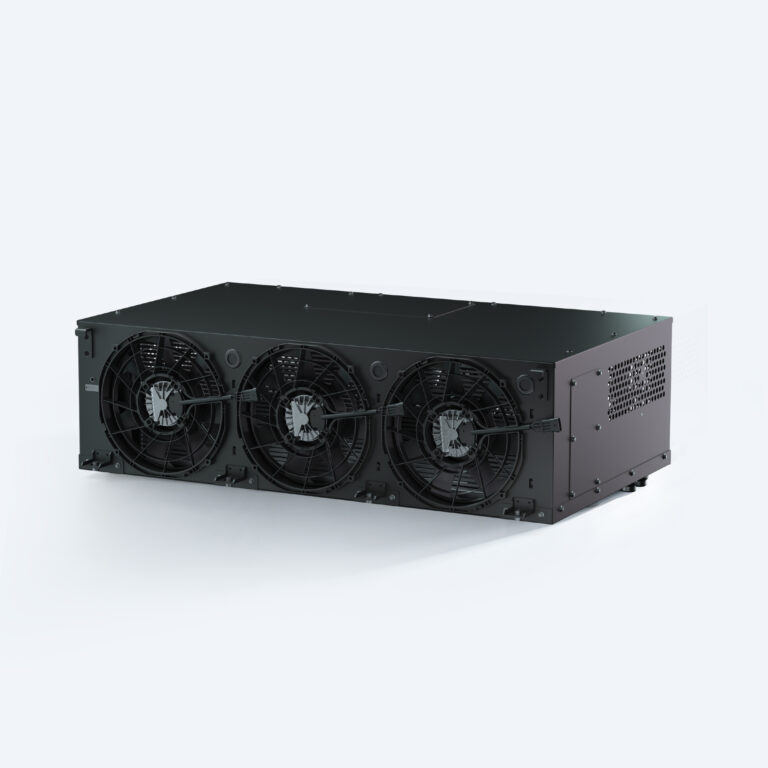
A high-voltage coolant heater (HVCH) is the PTC heater that warms coolant for battery preheating and cabin heating in electric buses, trucks, mining trucks, and construction machinery. Our range covers 6–18 kW, 20–25 kW, and 30–35 kW bands on 400V, 600V, and 800V platforms, with custom ranges on request. This guide walks through the same checks we ask buyers to complete before we quote a configuration.
How to compare vehicle coolant heater voltage and application
When a project brief asks for a car coolant heater or an automotive PTC heater, identify whether the vehicle needs to heat a coolant circuit or the air flowing through its HVAC unit. Share the vehicle application and the heating task so the supplier can propose the relevant product configuration.
A request for a 24V coolant heater or 24V PTC heater should state whether 24 V is intended to power the heating element or only the control circuit. Compare both power and control supplies with the released specification before selecting a unit. For a high-voltage PTC air heater, also provide the airflow, inlet temperature and installation space.
Is a PTC water heater the same as a coolant heater?
In vehicle specifications, PTC water heater can refer to a PTC coolant heater used in a liquid circuit. Confirm the approved fluid and concentration, operating voltage, inlet temperature and flow for the selected assembly. Share these conditions when requesting a heater quotation.
Selecting a high voltage heater for an 800 V bus
For an 800 V platform, share the minimum and maximum DC voltage at the heater terminals across the operating modes that call for heat. Ask the supplier for the operating limits and rated output conditions of the selected configuration.
If you are specifying a coolant heater for an electric school bus, identify whether the loop serves battery preheating, a cabin heat exchanger or both. Include the depot heating window, available power and coolant conditions in the RFQ. Review the 800 V electric bus coolant heater.
How to specify an automotive high-voltage heater
An automotive PTC heater can be configured for direct air heating or coolant heating. When selecting a PTC heater for electric vehicles, first identify the heat load and the medium that carries heat. For a PTC heater for bus HVAC, specify the cabin airflow and defrosting duty. For battery preheating, specify the coolant and the pack temperature target.
Share the application and request a heater quote
High voltage heater for EVs: coolant or air?
Choose a high voltage heater by the medium that carries heat to the load. A high-voltage coolant heater heats circulating coolant for battery preconditioning or a cabin heat exchanger, depending on the vehicle’s circuit. A high-voltage PTC air heater heats air directly in an HVAC assembly.
For a coolant heater inquiry, share the coolant type, inlet temperature and flow. For an air heater inquiry, share the airflow, inlet air temperature and duct layout. For either design, include the vehicle’s DC operating voltage range, target heat output and available installation space.
Define the heating task before the power rating
Ask the battery supplier for the applicable temperature range and the operating limits first. Clarify the intended use: battery preheating, cabin heating, or a combination of both. Record the battery’s initial state, environmental conditions, available heating duration, and the vehicle’s operating mode. Available power budget while the vehicle is parked and charging may differ from the budget while it is in motion, so the task definition has to cover both.
Never estimate heating time from the nameplate power rating alone. Battery mass, initial temperature, heat loss, coolant distribution, and available electrical power all affect the final result. Heating targets and test boundary conditions should be agreed jointly with the battery team and the vehicle integration team before any sample is ordered.
Match voltage and power at the same operating point
Obtain the minimum and maximum supply voltages for the vehicle under each relevant operating mode. Compare those values with the operating limits of the selected heater configuration, and do not rely on nominal platform labels such as 400V or 800V alone. Ask suppliers to state the voltage, coolant inlet temperature, and flow rate conditions under which their stated heating output was measured.
Our heaters are supplied at 15–35 kW per unit, with platform voltages up to DC 870V, and have been in mass production since 2021. For reference, 400V and 800V are the common EV platform benchmarks, and Webasto lists its HVH 50/70 units at 5–7 kW. Power band and voltage platform are one decision, not two: a heater that fits the voltage window but cannot deliver the required heat at the coldest start condition is the wrong heater, however good its datasheet looks.
System integrators must also confirm the electrical power budget. When other vehicle loads share the same power supply, the rated output on the nameplate does not represent the power actually available for heating at any given moment. Cable, connector, and protective-device selection must comply with the approved vehicle electrical design.
Check the control interface: CAN or thermostat
High-voltage heating power and low-voltage control power should be kept separate. Obtain connector diagrams, power requirements, and interface information for the selected model. Some configurations use CAN communication; others use a thermostat. Do not assume all heaters use the same interface.
Our B series uses CAN control with an enable signal; our E series uses a thermostat and has no CAN. Clarify who issues the heating request, which signals confirm actual operating status, which controller provides feedback on operating limits, and how the vehicle should respond if communication fails. Sharing a CAN bus does not constitute a complete control strategy. Confirm signal definitions, software versions, and diagnostic procedures in writing for the proposed project.
Check the coolant loop installation
A heater is one resistive element in a cooling circuit that may also contain a water pump, hoses, valves, cold plates, and other heat exchangers. Request pressure-drop data from the supplier for this heater under the specific coolant type, temperature, and flow conditions. Compare the requirements of the entire circuit with the pump’s performance curve.
When the circuit contains parallel branches, the pump’s total flow rate differs from the flow rate in the heater branch. Clarify how the flow rate through the selected branch is measured under each operating mode. For cold-start conditions, consult the pump and heater suppliers to confirm which data applies to the selected coolant and initial temperature conditions.
One shared interface record
Put the agreed items in a single record that the system supplier and the heater supplier both sign. Mark missing parameters as to be determined; suppliers cannot validate a full system configuration from an incomplete list of assumptions.
| Review item | Information the system supplier should agree with the heater supplier |
|---|---|
| Heating duty | Heat consumer, initial condition, target, and available time |
| Electrical supply | Minimum and maximum voltage and available power in each mode |
| Coolant loop | Fluid, concentration, heater branch flow, pressure, and inlet conditions |
| Control | Request owner, interface, feedback, restrictions, and fault handling |
| Installation | Released drawing, connectors, mounting, orientation, and service access |
| Verification | Hardware and software revisions, test conditions, and acceptance criteria |
| Procurement | Sample configuration, documentation, change communication, and quantity plan |
Validate samples in the installed system
Before testing starts, the relevant teams should agree on the battery and coolant initial state, sensor locations, operating modes, and acceptance criteria. Adopt a uniform time reference when recording heater requests and feedback, power conditions, coolant inlet and outlet temperatures, and heater branch flow rates.
Evaluate steady-state heating and the transition between operating modes. When measured data deviates from expectations, retain the raw data and verify interfaces and test boundaries together with the relevant suppliers. Never bypass protective functions to achieve ideal results; fault-injection work belongs in authorised test procedures.
Our Q-series heaters have documented laboratory validation activities covering vibration, water-circulation, and powered-performance evaluation at Shanghai University of Engineering Science. Sample validation in your installed system still matters: laboratory results describe the heater, and your vehicle describes the installation.
Confirm the production configuration
Upon acceptance of the sample, document the confirmed part numbers, drawing versions, connector layouts, applicable control interfaces, and any customer-specific options. System manufacturers and heater suppliers should agree on a change-communication mechanism and clarify which changes require further engineering review.
Demand forecasts and target delivery schedules may serve as a reference for procurement. For specific orders, actual production capacity, lead times, and commercial terms must be confirmed. Approval of a sample does not imply that other hardware or software versions are equivalent.
What to send with your enquiry
Send us the following and we will confirm whether our high-voltage coolant heater fits your vehicle and what integration work is needed:
- Application scenario, required power, full voltage range, coolant state, available space, and control interface.
- Heating task: battery preheating, cabin heating, or both, with operating conditions and available heating time.
- Which control your vehicle expects: CAN with enable signal, or thermostat.
- Coolant loop details: fluid, concentration, available flow rate, and pressure conditions at the heater inlet.
- If you plan to replace an existing heater, its officially released drawings and the boundary conditions of the current system.
Prices are quoted per project; the site lists no prices and has no online checkout. For the wider supplier landscape, see our high-voltage coolant heater manufacturers page, and for the selection detail behind this guide, see Choosing a PTC Coolant Heater for a Battery Thermal Management System. Battery-side context is on our battery thermal management system page.
Frequently Asked Questions
What is a high-voltage PTC heater? A high-voltage PTC heater is an electric heater that warms coolant or air in an electric vehicle, using a positive temperature coefficient element whose resistance rises as it heats. In EV applications it typically serves battery preheating and cabin heating, operating on the vehicle’s high-voltage platform rather than the 12V or 24V system.
How is a coolant heater different from an air heater? A coolant heater warms liquid in a cooling loop that carries heat to the battery or cabin heat exchanger. An air heater warms air directly. Coolant heaters suit battery thermal management because the same loop serves the battery, while air heaters suit cabin-only duty. The selection checks differ: coolant heaters need pressure-drop and flow verification, air heaters need airflow verification.
What voltage platform do I need? Match the heater to your vehicle’s actual supply voltages across operating modes, not to a nominal label. Our range covers 400V, 600V, and 800V platforms with custom ranges, at 15–35 kW per unit and platform voltages up to DC 870V. Ask the supplier to state the conditions under which rated output was measured.
CAN or thermostat control — which one? It depends on your vehicle architecture. CAN control with an enable signal suits vehicles that manage heating from a central controller. Thermostat control suits simpler installations without a CAN node for heating. Confirm who issues the heating request and how the vehicle responds to a communication failure before choosing.
What should I ask the supplier before approving samples? Ask for the heating task definition, voltage and power at the same operating point, pressure-drop data for your coolant and temperatures, connector and interface documentation, and the change-communication process. Agree on test conditions and acceptance criteria before testing starts, not after results disappoint.
Do you supply a complete heating system or the heater only? We supply the heater and support integration with your vehicle team: configuration selection, interface documentation, and sample validation. System-level items such as pumps, hoses, and cold plates are specified jointly for your project. Send your application details for a written quotation.
References & Sources
- EVLINK high-voltage coolant heater product page: power bands 6–18 / 20–25 / 30–35 kW, platforms 400V / 600V / 800V, 15–35 kW per unit, platform voltages up to DC 870V, mass production since 2021.
- EVLINK high-voltage coolant heater manufacturers page.
- EVLINK, "Choosing a PTC Coolant Heater for a Battery Thermal Management System," 2026-11-04.
- Q-series laboratory validation activities (vibration, water-circulation, powered-performance evaluation), Shanghai University of Engineering Science, per EVLINK product documentation.
- SEMrush keyword data, US database, 2026-11-09: high voltage ptc heater, 50 searches/month, KD 4%, commercial intent.
- Google search results (US, English), 2026-11-09, for "high voltage ptc heater" and "high voltage coolant heater" (competitor listings cited in text, including Webasto HVH 50/70 at 5–7 kW and Cascadia Motion 400V/800V products).